


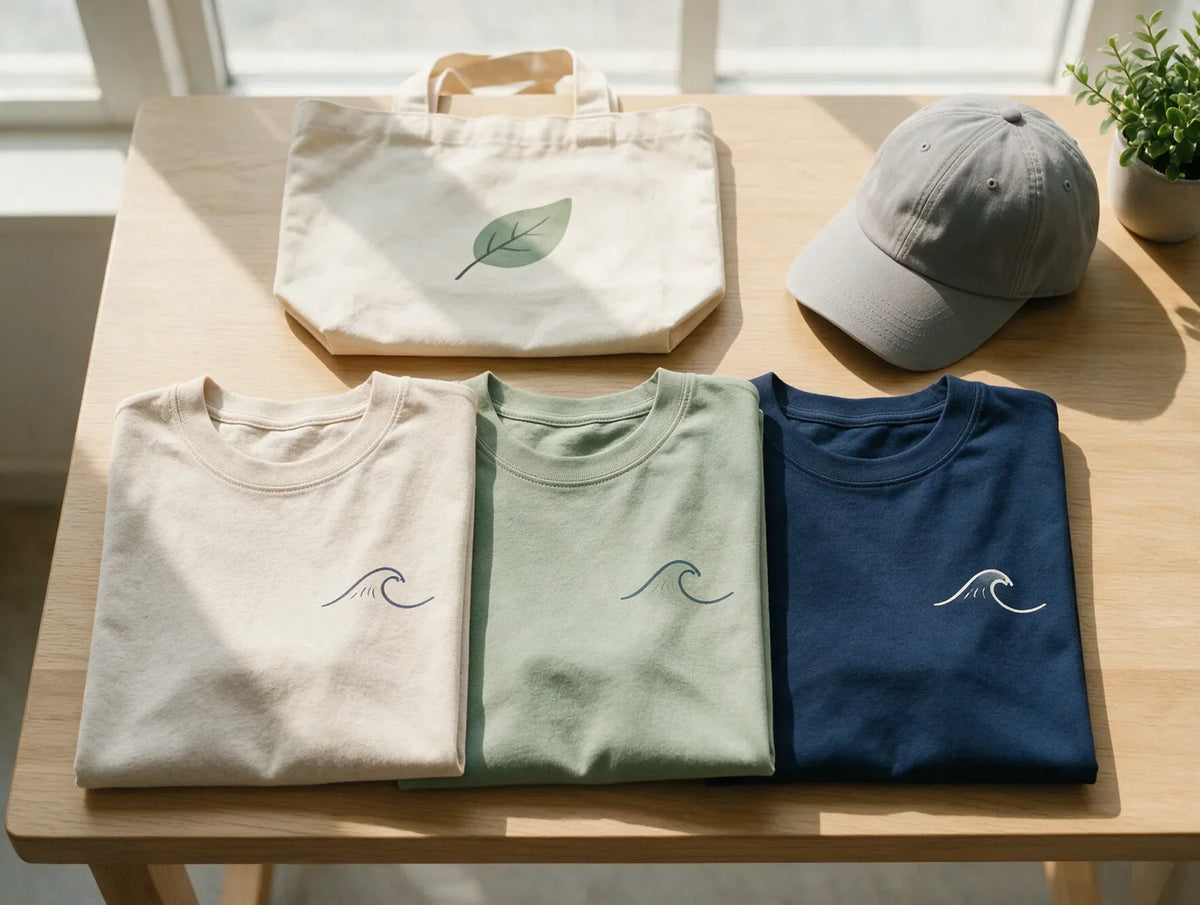
The most sustainable custom merch is merch that gets worn, used and kept. Before you compare fabrics and inks, start with three simple habits: order only what you need, make prints that last and choose items people actually want. This guide covers practical ways to cut waste from your next merch order, whether you run a business, a team or a small brand.
When people talk about eco-friendly printing, they usually mean materials and inks. Those questions matter, but one of the most visible kinds of merch waste is simpler: boxes of leftover shirts in the wrong sizes, event tees with last year's date and giveaways that never leave a drawer. The ideas below tackle that waste first.
Where merch waste comes from
Most leftover merch can be traced back to how it was ordered:
- Big runs to hit a price. When setup costs are spread across an order, it is tempting to order more pieces than you need just to bring the price per piece down.
- Guessed size breakdowns. Ordering mostly mediums and larges leaves some sizes stacked up and others sold out.
- Dated designs. A year, a one-time slogan or an old logo gives a shirt a short shelf life.
- Items nobody asked for. Giveaways picked for price alone often go unused.
Fix those four and you save money as well as materials.
Order what you need to reduce merch waste
There are no setup fees and no minimums on DTF transfers, so you can order transfers for the shirts you need now instead of a big run up front. Gang sheets are 22 inches wide and sold by length, and the price stays the same no matter how many designs you fit, so one short sheet can cover several designs and sizes.
- Start small. Test a new design with a small batch, then reorder what sells.
- Restock as you go. Reorder best sellers in small batches instead of holding a large inventory.
- Keep blanks blank. If you press your own garments, press when an order comes in. A blank shirt can still become any design; a printed shirt in the wrong size cannot.
- Store transfers right. Unpressed transfers keep for 6–12 months in a cool, dry place, stored flat or rolled, so order what you will use in that window.
See every sheet length on our DTF transfer pricing page. If you sell apparel, our page on DTF transfers for resellers explains white-label transfers, blind shipping and restocking in small batches.
Match the print method to the run
The right method depends on how many identical pieces you need. For a large run of one simple design, screen printing spreads its setup across the whole order, which makes sense when you know every piece will be used. For small batches, many designs or personalized names, DTF transfers let you print only what you need, with no setup to repeat for each design.
See how the two compare on cost, detail and fabrics in our guide to DTF vs screen printing.
Try print on demand for new designs
Print on demand means items are printed as orders come in, rather than in bulk before you know what will sell. It suits new designs, seasonal drops and community or fan merch where demand is hard to predict.
Our print on demand is set up by inquiry, without store integrations or automatic order syncing, so every project starts with a conversation. Tell us what you want to sell, and we will talk through the options.
Make prints that last
A shirt that still looks good after many washes is a shirt nobody has to replace. Our DTF transfers are lab tested for 100+ washes when pressed at the recommended settings: 320°F (160°C) with medium pressure for 15 seconds, a cold peel and a short second press.
Care matters just as much. Share these steps with your customers, staff or team:
- Wash inside out in cold water.
- Skip bleach and dry cleaning.
- Air dry instead of using a hot dryer.
Our guide on how to wash DTF shirts explains each step, and the DTF application guide covers pressing.
Choose blanks people keep
Sustainable custom apparel starts with the garment, because a print only lasts as long as the shirt it is on. A comfortable blank that fits well gets worn again and again, while a thin, stiff shirt chosen only for its price tends to end up in a drawer.
- Prioritize fit and feel. People keep what is comfortable, so try a blank on before ordering a big batch.
- Match the item to its use. Hoodies for cool-weather teams, performance tees for sports and custom tote bags for events and everyday errands.
- Look at fiber content. Some blank makers offer organic cotton or recycled polyester. If that matters to your brand, check what the maker publishes about the fabric and weigh it alongside comfort and durability.
For a side-by-side look at popular options, see our guide to the best blank t-shirts for printing.
Design merch that stays relevant
- Skip the year. Staff, volunteer and team shirts without a date can be worn season after season.
- Put event details on a small add-on print. Keep the main design evergreen, and add a date or event name as a small sleeve or back print only on the shirts that need it.
- Design something people want to wear. A clean, well-made design gets worn on weekends; a cluttered one stays in the closet.
- Make it personal. Names and numbers turn a giveaway into a keeper, and with DTF they all fit on one gang sheet.
Plan sizes to avoid leftovers
Leftover sizes are one of the easiest kinds of merch waste to prevent:
- Collect sizes first. Use a simple form or spreadsheet to get every person's size before you order.
- Order to the count. Match the real numbers, and add spares only where you truly need them.
- Size the print for each garment. Adult, youth and toddler versions of a design can share one gang sheet.
- Choose one-size items for open events. When you cannot know sizes in advance, tote bags and adjustable caps skip the guesswork.
Keep your sustainability claims honest
If you market your merch as sustainable, be specific about what you did. "Printed in small batches" or "made to order" tells customers something real. A vague label without details can mislead buyers and cost you their trust.
Only describe materials or processes you can back up with information from your suppliers. Honest, specific claims are more convincing than broad green promises.
Frequently asked questions
What is the most sustainable way to order custom merch?
Order only what you need, choose items people will actually use and make prints that last. Collect sizes before you order, and leave dates off designs you want people to keep wearing.
Does print on demand reduce waste?
It can. Items are printed as orders come in rather than in bulk up front, so you are less likely to end up with unsold stock. Our print on demand is set up by inquiry, without store integrations, so contact us with your plans first.
Are there minimums on DTF transfers?
No. There are no setup fees and no minimums on DTF transfers, so you can order a single design or a full sheet of different designs and sizes.
How long do DTF prints last?
Our DTF transfers are lab tested for 100+ washes when pressed at the recommended settings. Washing inside out in cold water, skipping bleach and air drying help them last.
What can I do with leftover merch?
Give it a second life: hand it out to new staff or volunteers, add it to welcome kits or donate it to a local cause. Next time, collect sizes before you order and keep designs date-free so any spares stay useful.
Start small and make it last
Sustainable merch does not have to be complicated. Before your next order, run through this quick checklist:
- Sizes collected and counted, not guessed
- A design without dates or details that will age quickly
- Blanks people will want to wear or use
- Quantities matched to real demand, with reorders planned
- Care steps ready to share with whoever wears it
Tell us what you are planning, and we will help you choose the right products and quantities.


