


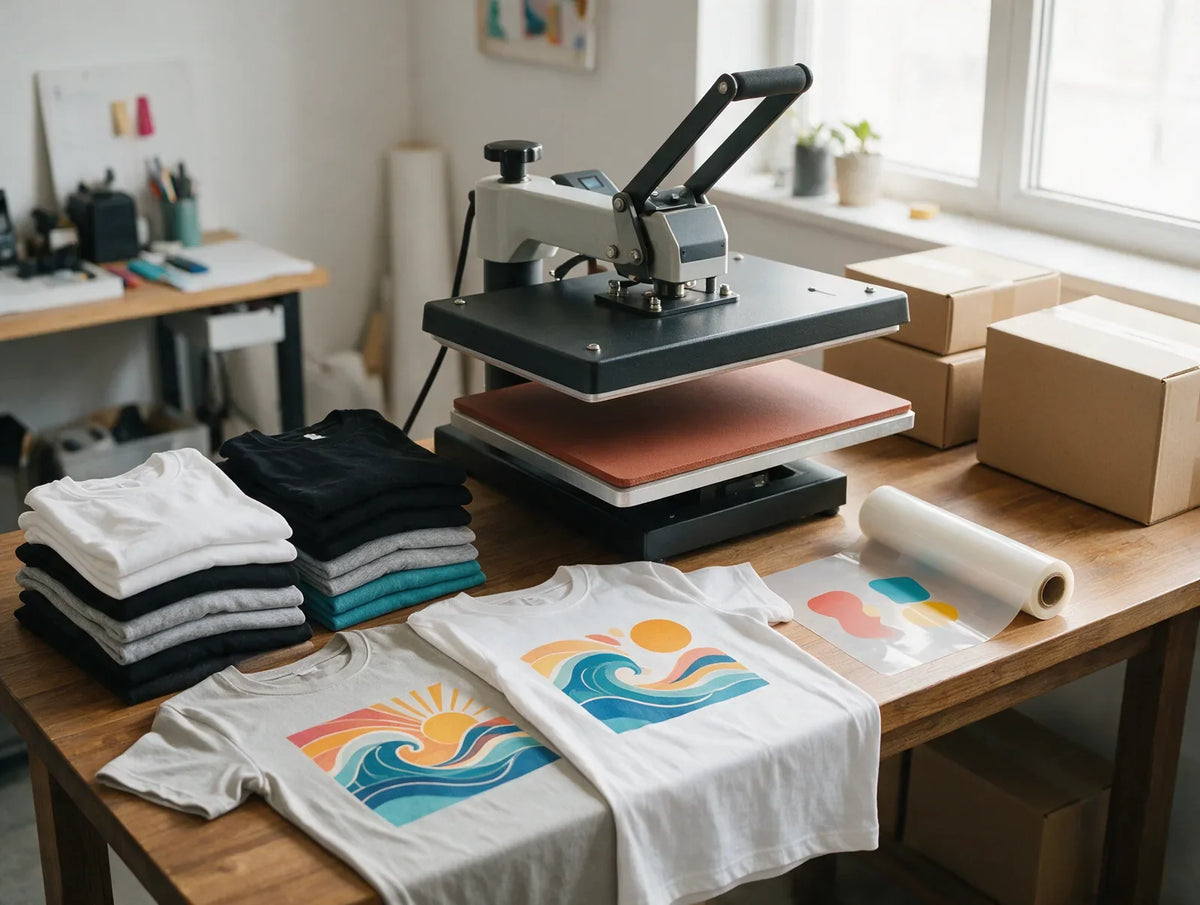
If you're working out how to start a t-shirt business, DTF transfers solve the biggest early hurdle: you don't need a printer. You order full-color transfers, press them onto blank shirts with a heat press and sell the finished shirts. That lets you put your early budget into designs, blanks and reaching buyers instead of equipment.
This guide walks through each step in order, from choosing a niche to placing your first transfer order, along with the decisions that matter at each stage.
Why start a t-shirt business with DTF transfers
DTF (direct-to-film) transfers are printed on film, coated with adhesive and delivered ready to press. You apply them with heat, so a t-shirt business with DTF needs far less equipment than one that prints in-house.
- No printer to buy. You skip the equipment, upkeep and learning curve. Our comparison of buying a DTF printer vs outsourcing breaks down the costs.
- Small runs are easy. There are no setup fees and no minimums on DTF transfers, so you can test a design on a few shirts before you commit.
- Full color on dark shirts. Transfers include a white underbase, so colors stay bright on black and navy blanks.
- Room to grow. DTF works on cotton, polyester, blends, tri-blends, canvas and denim, so you can add hoodies and tote bags later.
- Quick restocks. Orders placed before 3 PM EST, Monday to Friday, are printed the same day.
How to start a t-shirt business in 9 steps
Work through these in order. Each step builds on the one before it, and skipping ahead usually means unsold stock or prices that don't cover your costs.
Step 1: Choose a niche and a business model
A niche tells you who you're designing for. "Funny shirts" is crowded and hard to reach. Shirts for pickleball players, nurses, a school booster club or your hometown have a clear audience you can find and talk to.
Next, decide what kind of business you're building:
- Your own brand. You create the designs and sell them online or at events. If you want to start a clothing brand, this is the path, and a consistent style matters as much as any single design.
- Custom orders. You make shirts for teams, schools, churches, clubs and local businesses, using their logos and ideas.
- Both. A small brand line plus custom work keeps your heat press busy between launches.
Step 2: Create designs that print well
Only sell designs you made, bought a commercial license for or have permission to use. Team logos, characters and brand names belong to someone else, and using them can get your listings taken down.
- File type: a PNG with a transparent background at 300 DPI works best. We also accept AI, EPS, PDF and JPG files.
- Print size: design at the size you'll press. Adult full-front prints are typically 10–12 inches wide, and left-chest logos 3–4 inches. Our DTF size guide covers other placements.
- Fine detail: keep text at 8 pt or larger, and remove white backgrounds and stray pixels.
The full checklist is on our DTF artwork requirements page.
Step 3: Pick your blank shirts
The blank shapes how your shirt feels, fits and holds up, so test before you commit. Order a few styles, press a design on each, then wash and wear them.
- Fabric: DTF works on cotton, polyester and blends, so you can choose for feel and fit.
- Size range: make sure the style comes in every size your customers need.
- Colors: start with a small set of colors that suit your designs.
- Consistency: stick with one or two styles so sizing stays predictable for repeat buyers.
For a closer comparison, see our guide to the best blank t-shirts for printing.
Step 4: Set up a pressing station
Your main piece of equipment is a heat press. A household iron works in a pinch, but a heat press gives you even heat and pressure on every shirt.
- Heat press with a platen big enough for your largest design
- Parchment paper or a Teflon sheet for the second press
- Heat tape to hold transfers in place on hats
- A clean worktable for prepping, folding and packing

Pre-press each shirt so it's clean, dry and wrinkle-free. Then press our transfers at 320°F (160°C) with medium pressure for 15 seconds, let the film cool completely and peel, and press again for 5 seconds with parchment paper or a Teflon sheet on top. Every step is in our DTF application guide.
Step 5: Order your first transfers
There are four ways to order DTF transfers, depending on how your artwork is set up:
- Transfers by size: single designs at the exact size you need, from around $0.03 per square inch. A 12" × 12" transfer is $4.51.
- Gang Sheet Builder: arrange several designs on one 22-inch-wide sheet in the free Gang Sheet Builder, right in your browser with no account needed.
- Ready-made sheet: upload a finished 22-inch layout if you design sheets yourself.
- Black Knockout: for black, charcoal and deep heather shirts, where the shirt shows through instead of black ink.
Gang sheets start at $5.99 for 1 ft and go as low as $4.50 per foot on 20 ft and 40 ft sheets. Every length is listed on our DTF transfer pricing page.
Step 6: Price every shirt before you sell
Before a design goes live, add up what one finished shirt costs you: the blank, the transfer, your pressing time, packaging, selling fees and a share of overhead. Then add your margin on top.
Price from your real costs, not by copying the bargain listings you see online. Our guide on how to price custom t-shirts walks through the formula with a worked example.
Step 7: Handle the business basics
- Register your business. Requirements vary by state, county and city, so check what applies where you live.
- Check sales tax rules. Find out what your state requires for the products you sell. Tax-exempt purchasing is available for resellers; see tax exemption for resellers for details.
- Separate your money. A business bank account makes it easier to track costs and see which designs are worth reordering.
- Record every cost. Log what you spend on blanks, transfers, supplies and fees so your prices stay accurate.
Step 8: Choose where to sell
- Etsy and other marketplaces: built-in shoppers, but more competition and fees. Our guide to selling DTF shirts on Etsy covers the details.
- Your own website: more control over your brand and customer list, but you have to bring the traffic.
- Markets and events: craft fairs, festivals and pop-ups let you test designs face to face.
- Local groups: teams, schools, churches and businesses need shirts for seasons, events and staff.
Prefer to sell ready-to-press transfers instead of finished shirts? Our transfers ship without Tidal Colors branding, and we can ship orders straight to your customer. See DTF transfers for resellers for how it works.
Step 9: Launch small and reorder what sells
Start with a handful of designs and a short gang sheet instead of a big inventory. Unpressed transfers keep for 6–12 months in a cool, dry place when stored flat or rolled, so you can keep transfers on hand and press shirts as orders come in.
- Test first: the free DTF transfer sample pack lets you press and wash real transfers. You pay $4.99 for shipping and get it back as $4.99 store credit.
- Save on your first order: new customers get 10% off with code WELCOME10.
- Reorder what works: with no minimums, restock proven designs in small batches.
- Plan for volume: for larger volume pricing, contact us at (678) 845-6864 or hello@tidalcolors.com.
Frequently asked questions
Do I need a DTF printer to start a t-shirt business?
No. You can order ready-to-press transfers and apply them with a heat press. Owning a printer generally makes sense only once your volume is steady and high enough to keep it busy.
How much money do I need to start?
It depends on your heat press, your blanks and how many designs you launch with. Outsourcing transfers keeps the list short, and there are no setup fees or minimums on DTF transfers. Gang sheets start at $5.99 for 1 ft.
Can I run a t-shirt business from home?
Many small shops start with a heat press and a worktable at home. Check your local rules for home-based businesses before you begin.
Will DTF prints hold up for my customers?
Our transfers are lab tested for 100+ washes. Press with the right settings, and tell customers to wash inside out in cold water, skip bleach and dry cleaning, and air dry.
Can I start a clothing brand with DTF transfers?
Yes. DTF suits small runs of many designs, so you can launch a collection, see what sells and reorder. Our transfers ship without Tidal Colors branding, so the prints carry your brand, not ours.
Start small and build on what sells
A t-shirt business grows one good design at a time. Pick a niche, get your files and blanks right, price from real costs and test before you scale. DTF transfers let you do all of it without buying a printer.


